
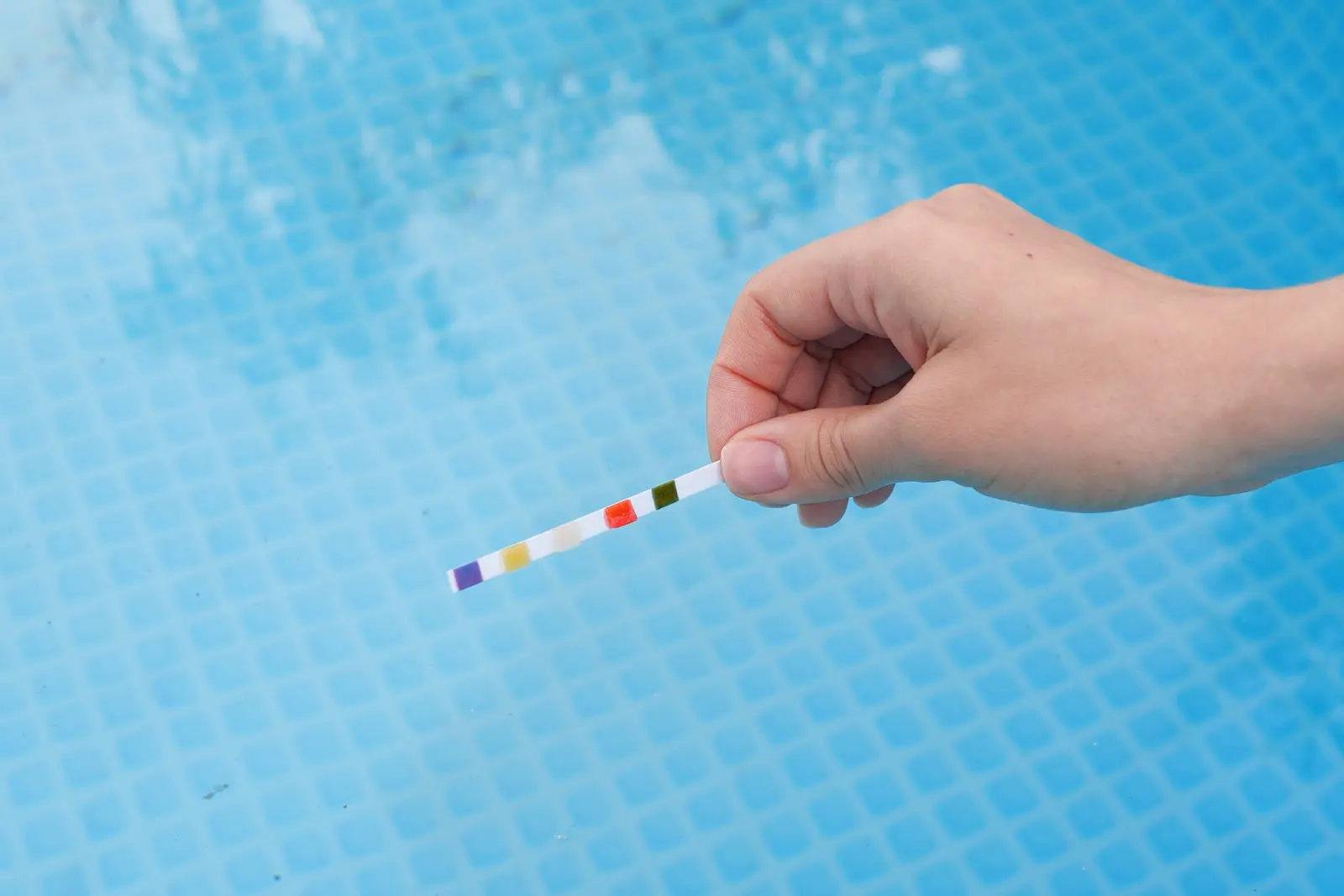
Balanced pool water is the difference between a clean, comfortable swim and a summer of cloudy water, irritated eyes, and equipment problems. Water chemistry can sound technical, but the fundamentals come down to a handful of levels you can learn to read and manage yourself. When those numbers stay in range, your water looks clear, feels good, and protects the surfaces and equipment you paid for. When they drift, small problems tend to compound quickly.
It’s important to know what to test, the ranges to aim for, how often to check, and the signs that tell you something is off. If you would rather have a second opinion on a reading, our local pool store in Rockville, VA, will test a water sample for you and point you toward the right fix.
The Core Levels Every Pool Owner Should Track
Five measurements do most of the work. You do not need a chemistry degree to stay on top of them, just a reliable test kit or test strips and a sense of what each number controls.
pH
pH measures how acidic or basic your water is, on a scale of 0 to 14, and you want it to sit between 7.4 and 7.6. This is the single most important reading because it shapes almost everything else. Water that turns too acidic corrodes metal fittings and etches plaster, while water that swings too basic causes scaling and makes chlorine sluggish. It also affects comfort directly, since water well outside the ideal range stings the eyes and dries out skin.
Total Alkalinity
Think of alkalinity as the shock absorber for pH. It buffers the water so your pH doesn’t lurch every time it rains or you add a chemical. Aim for 80 to 120 parts per million. When alkalinity runs too low, pH becomes unstable and stubborn to correct. Too high, and pH tends to creep upward and resist adjustment. Getting alkalinity right first makes balancing pH far easier.
Sanitizer (Chlorine)
Chlorine is what actually keeps your water safe, killing bacteria and holding algae in check. Most residential pools should carry 1 to 3 parts per million of free chlorine. It helps to understand the difference between free chlorine, which is available to sanitize, and combined chlorine, which has already reacted with contaminants and lost most of its strength. A heavy chlorine smell usually signals combined chlorine and a pool that needs to be shocked, not one with too much sanitizer.
Calcium Hardness
This tells you how much dissolved calcium is in your water, with a target of roughly 200 to 400 parts per million. Soft water that runs low in calcium pulls minerals out of plaster, grout, and other surfaces, causing etching over time. Hard water that runs high leaves cloudy water and scale deposits on tile and equipment. The right balance quietly protects your finish.
Cyanuric Acid (Stabilizer)
Cyanuric acid shields chlorine from the sun. Without it, ultraviolet light burns off unstabilized chlorine within hours, and you end up spending more just to hold sanitizer in range. Most outdoor pools do well between 30 and 50 parts per million. Too little leaves chlorine exposed, and too much can actually blunt its effectiveness, which is why more is not better here.
How Often Should You Test Your Water?
Testing frequency depends on how hard the pool gets used and what the weather is doing. As a general rhythm, check chlorine and pH two to three times a week during swim season, since those move the fastest. Run the fuller panel about once a month or any time something looks off.
A few conditions push chemistry out of range faster: stretches of heat and strong sun, back-to-back pool parties, heavy rain, and topping off after evaporation or a leak. If you have added a lot of fresh water recently, retest, because tap water shifts your balance. Owners who would rather not track all of this themselves often fold it into weekly pool maintenance.
Warning Signs Your Water Is Out of Balance
Your pool often tells you it needs attention before a test kit confirms it. Learning to read these signals helps you catch problems while they are still small.
- Cloudy or dull water usually points to a chemistry imbalance, weak filtration, or high calcium.
- A green tint or slippery walls means algae is taking hold, typically from low or ineffective chlorine.
- Stinging eyes and dry, itchy skin often trace back to pH that has drifted, not to “too much chlorine” as many people assume.
- White, crusty scale on tile and fittings signals high calcium or high pH.
- Corroded ladders, rails, or equipment suggest water that has turned too acidic.
Caught early, most of these call for a simple adjustment. Left alone, they lead to stained surfaces, worn equipment, and bigger repair bills down the line.
When to Lean on a Local Pool Store
Even with a solid routine, some situations call for a professional water test. If your readings stay stubborn, the water refuses to clear after treatment, or you are opening the pool for the season, a shop-grade analysis gives you a fuller picture than test strips alone.
The right pool store near you does more than sell chemicals off a shelf. Staff can read your water sample, tell you what to add and how much, and match products to your exact numbers instead of leaving you to guess. That guidance matters, since the wrong product, or the right one in the wrong dose, can deepen an imbalance rather than fix it. Our Rockville store offers water testing and swimming pool supplies near you, along with advice from people who work through these problems every day. When you would rather not puzzle out a tricky reading on your own, a dependable pool service near me turns guesswork into a fast, confident fix.
Pool water chemistry rewards consistency more than perfection. Once you know the handful of levels that matter and check them on a regular rhythm, keeping your water clear and comfortable becomes routine rather than a chore. Test often, respond to what the water is telling you, and lean on a professional when a reading has you stumped. Do that, and your pool stays swim-ready through the season with far fewer surprises.